Market Updates
Market Updates
How does the real estate commission lawsuit change who pays in Texas? Traditionally the seller pays both agents, but a 2023 lawsuit may shift the buyer's agent cost onto buyers.
Heading into fall 2023, a major lawsuit was decided that challenges how commissions work. Today a seller hiring a listing agent for the MLS typically agrees to a 5% to 6% commission, and on a $300,000 home that 6% is about $18,000, split so $9,000 goes to the listing agent and $9,000 to the buyer's agent, meaning the seller pays for the buyer's representation too. The plaintiffs, who were homeowners, argued that is unfair. The likely result is sellers paying less since they may no longer cover the buyer's agent, while buyers may need to pay their own agent directly. It is a big shift in how homes are bought and sold.
Hi, welcome to Living in El Paso, Texas. My name is John Peña with Peña El Paso Realty Group. We hope that you are doing well as we transition into the fall of 2023 and there are going to be some big changes to real estate and we're just going to touch on it ever so briefly
in this episode. But if you're interested, please join Alex and myself next week on Saturday. We're going to do a live episode where we're going to answer any questions that you might have and we're going to elaborate on this topic.
But the topic is real estate commissions. Commissions are currently the way that real estate agents get paid. However, if you're not aware, there's something a little bit fishy with the way that the structure currently exists now.
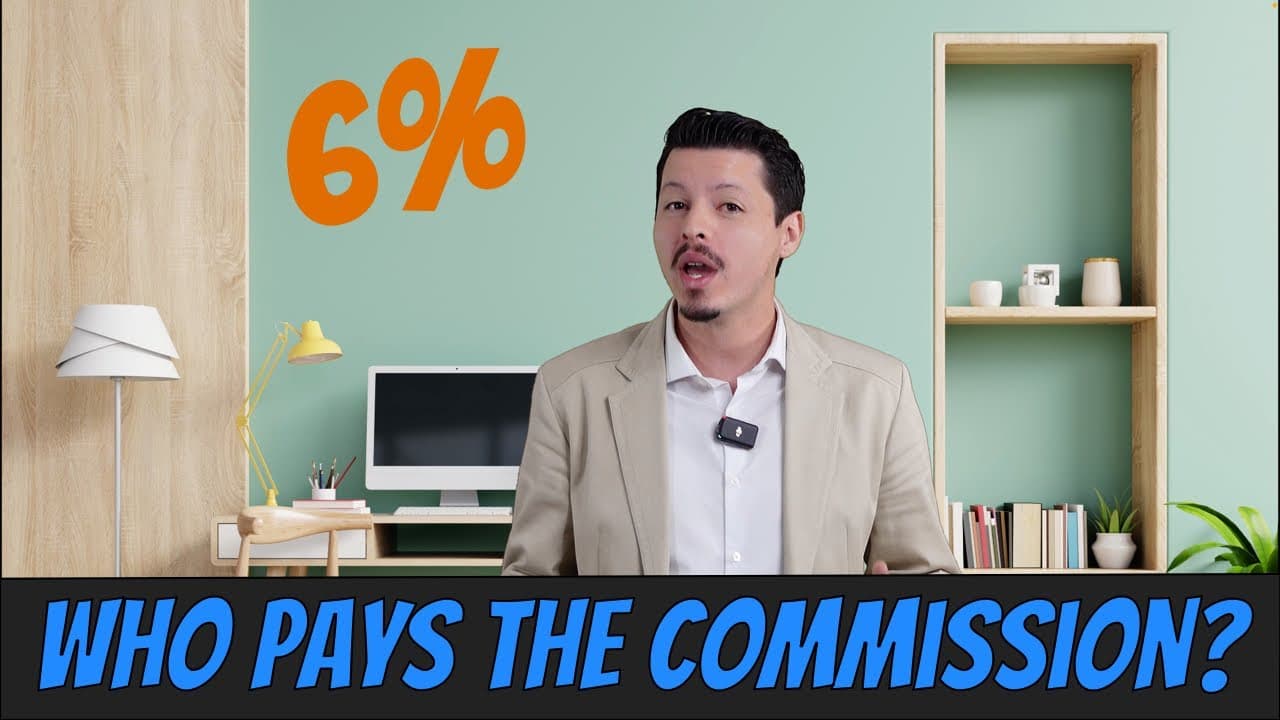
So if a homeowner is currently, if they're going to sell their home traditional, they want to hire a real estate agent, they want their home to be on the MLS, then they're going to agree to pay a real estate commission. Typically it's five to 6% of the sales price.
So on a $300,000 house, a 6% commission is $18,000 that's going to be paid to a real estate agent. But here's where it gets a little bit sketchy. Not only is the homeowner, the seller, going to pay the commission for their real estate
agent who helped them sell the home, the homeowner is also going to pay the commission of the real estate agent who represented the buyer. Okay. Now this sounds probably a little bit odd and honestly it is because why should a homeowner,
a seller, be forced to pay the commission of the real estate agent who represented the opposing party, the buyer. It honestly doesn't make too much sense. So in that example of that $300,000 house at closing, the seller, $9,000 is going to
go to their real estate agent who helped them sell the home and another $9,000 is going to go to the buyer's agent who represented the buyer. Recently a lawsuit just came down and was awarded on behalf of the plaintiffs who are homeowners who said, this is not fair.
This practice is unfair. And I think honestly they have a pretty good point. Now there are some counterpoints and we'll talk about that next week. But like I said in this episode, we just wanted to bring this to your attention because
it is going to change the way that homes are bought and sold in our country. It's likely going to mean that it's going to cost sellers less money to sell their home because they won't be paying the commission to a buyer's agent. But it also means that it may increase the cost for buyers to purchase a home because
they'll have to pay their real estate agent themselves. Okay. So this is going to be, like I said, this is going to have a pretty big impact on real estate and we don't want to get into it all today because there's a lot of different topics
to talk about. If you're interested in this topic, please consider joining us next week when we're going to do a live episode. You can ask questions in the comments and we're going to, we're going to go into it
in more depth. In the meantime, we hope that you're enjoying the cooler weather and we'll see you in the next episode.